Quick answer
Best overall: Geofleet — multi-hub dispatch, auto-allocation, shipper rate charts and driver payouts together. Best for adding client portals and invoicing: Onfleet with Courier Suite. Best for proof-driven B2B courier runs: Track-POD. Best for small courier teams on scheduled routes: Upper. Best for configurable multi-depot scheduling: eLogii. Best for enterprise first-to-last-mile networks: Locus.
How we evaluated courier platforms
Courier software was judged on the jobs a courier dispatcher and finance team do daily: taking bookings from many clients, applying the right service level and cutoff, assigning drivers across hubs, capturing proof, and turning trips into invoices and payouts. Sources were the vendors’ own product and pricing pages, reviewed in September 2026. As the publisher, Geofleet ranks itself first; the rest are ordered by fit for a multi-client courier.
Running many clients from one dispatch floor
Most couriers serve dozens of shippers, from a pharmacy needing two-hour delivery to a retailer sending next-day parcels. Ask whether the platform can keep them apart without separate systems.
- Per-client service levels, cutoffs and delivery windows applied automatically at booking.
- Client-specific proof rules, labels and custom fields.
- Branded recipient messages in each client’s name, where the contract requires it.
- Client logins that show only that client’s jobs, history and proof.
- Order intake by portal, API, e-commerce connector or file, per client.
Hubs, zones and cutoffs
Growth usually means a second hub or city. The software should let each hub set its own zones, cutoffs and planning rules while head office sees one consolidated picture. Test how an order moves between hubs, how same-day jobs are allocated without breaking scheduled routes, and whether a subcontracted driver at one hub can be restricted to that hub’s work.
Rate charts, invoices and driver payouts
Margin leaks in couriers usually happen after delivery: a waiting-time charge not billed, a zone surcharge missed, or a driver paid for a failed attempt that was never charged to the client. Look for a platform that prices each job from a client rate chart at booking, adjusts for real events such as waiting or extra stops, and calculates the driver or partner payout from the same verified trip. That single source of truth is what makes month-end reconciliation fast.
Proof and SLA evidence
Same-day documents
- Proof to require
- Named recipient and signature
- SLA evidence for the client
- Collection and delivery timestamps
Parcels to homes
- Proof to require
- Photo with geotag, safe-place note
- SLA evidence for the client
- First-attempt rate and ETA accuracy
Pharmacy or age-restricted
- Proof to require
- ID check or OTP
- SLA evidence for the client
- Verification record per drop
B2B pallets and cartons
- Proof to require
- Barcode scans and signed note
- SLA evidence for the client
- Discrepancies logged at handover
Cash on delivery
- Proof to require
- Payment captured in the app
- SLA evidence for the client
- Collected amount per route
| Service type | Proof to require | SLA evidence for the client |
|---|---|---|
| Same-day documents | Named recipient and signature | Collection and delivery timestamps |
| Parcels to homes | Photo with geotag, safe-place note | First-attempt rate and ETA accuracy |
| Pharmacy or age-restricted | ID check or OTP | Verification record per drop |
| B2B pallets and cartons | Barcode scans and signed note | Discrepancies logged at handover |
| Cash on delivery | Payment captured in the app | Collected amount per route |
Make failure reasons structured, not free text, so you can report SLA misses by cause and show clients what was within your control.
Six courier platforms compared
1. Geofleet: multi-client, multi-hub courier networks
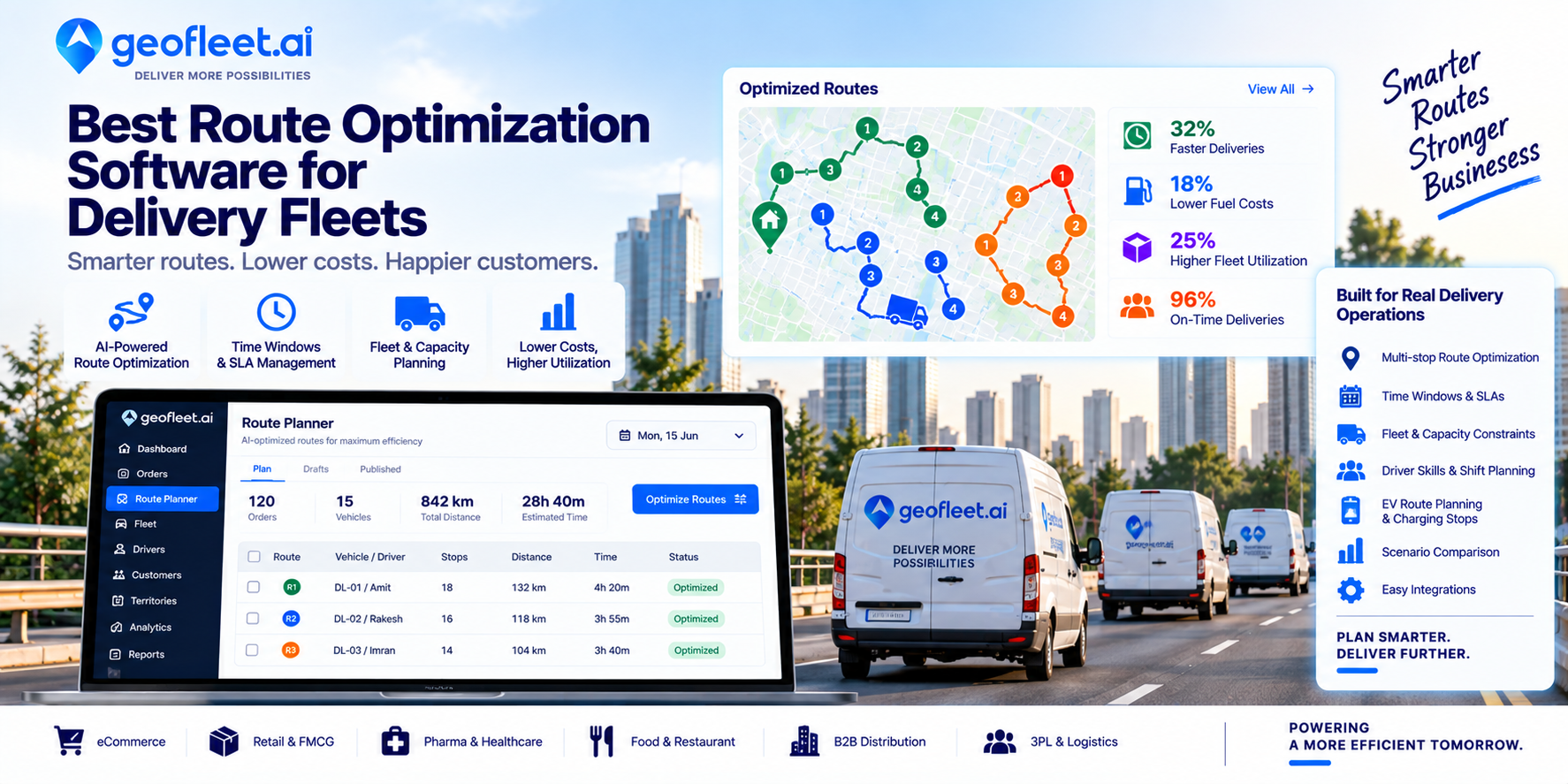
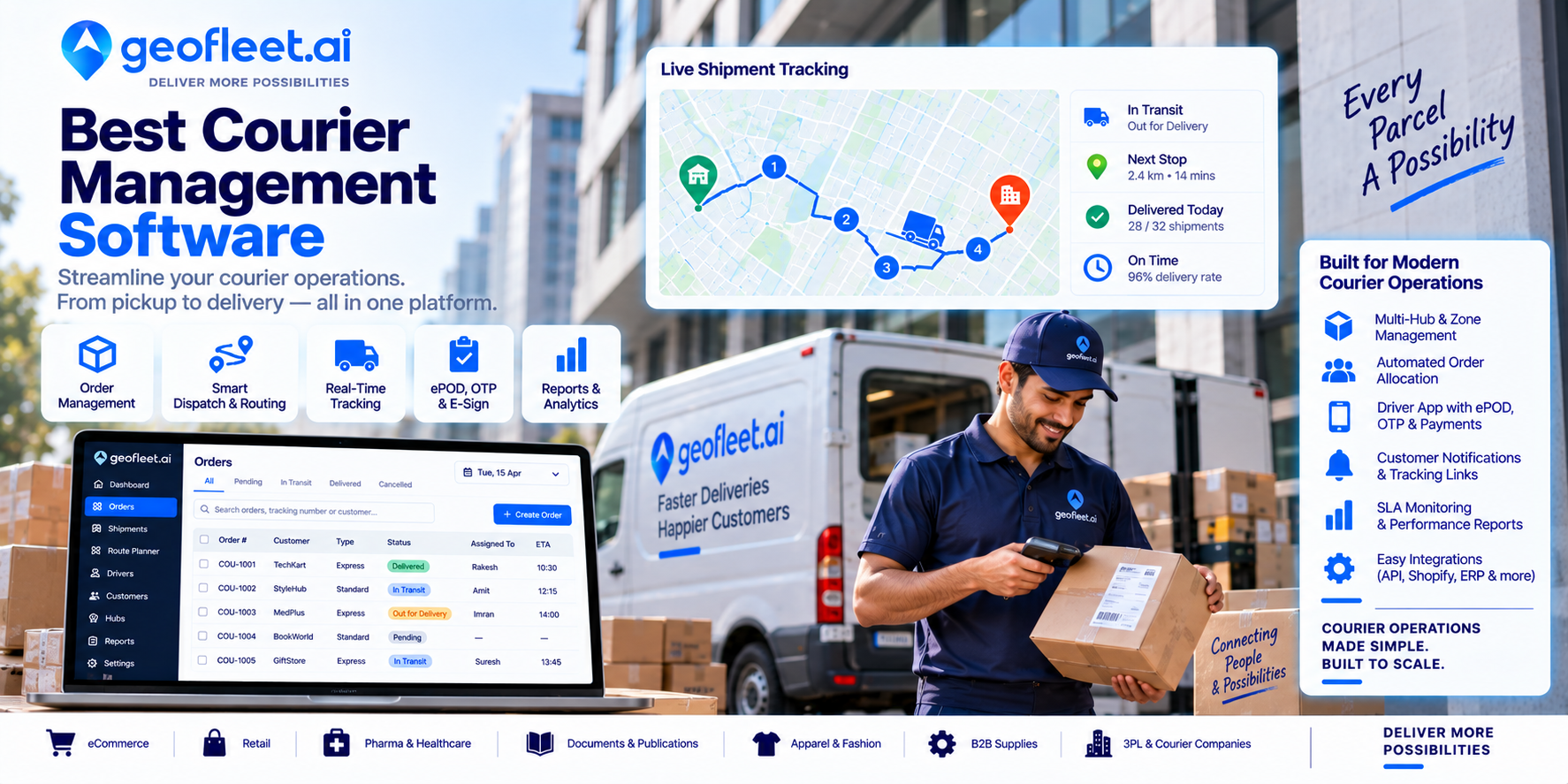
Geofleet was built for couriers juggling many shippers and hubs from one command centre. Planning Profiles give each shipper or hub its own service rules; Auto Allocation assigns same-day jobs against existing route capacity; drivers capture scans, photos, OTP and payments in the app; and Shipper Rate Charts and Captain Payouts turn each completed trip into a client charge and a driver or partner payout. Barcode and ID verification and AI auto-dispatch are in Premium, and Enterprise adds a multi-location dashboard and geo-fencing.
Ask the vendor to prove: Price one real week of jobs through your rate cards, then reconcile the invoice and driver payouts against your current spreadsheet.
2. Onfleet: adding client portals and invoicing to an established platform
Onfleet sells a Courier Suite add-on, from $299 a month on top of a base plan, described as built for couriers and carriers (vendor site, Sept 2026). It lists customizable services and rates, client-facing order entry and tracking portals, e-commerce order intake, client invoicing and label printing. Driver pay is not listed among the add-on features, so settlement may need another tool.
Ask the vendor to prove: Add the base plan and Courier Suite together at your task volume, and ask how driver or subcontractor pay is handled.
3. Track-POD: B2B courier runs where proof settles disputes
For couriers delivering to businesses, the signed, geotagged record often matters more than speed. Track-POD emphasises electronic signatures, photos, discrepancy capture and documents, with route planning, live tracking and customer updates around them, plus vehicle checks for fleet compliance.
Ask the vendor to prove: Check whether each client can have its own proof rules and document template.
4. Upper: small courier teams on scheduled routes
Upper suits a courier with a handful of drivers running planned multi-stop routes. Route planning, dispatch, the driver app, live GPS, proof and notifications are covered, which is enough for scheduled work. Multi-client billing and on-demand allocation are areas to probe before committing.
Ask the vendor to prove: Test a same-day job arriving mid-route, and ask how you would separate data and reporting per client.
5. eLogii: configurable scheduling across depots and job types
eLogii’s depth in multi-depot, multi-day and skills-based planning, plus custom field workflows and branded tracking, suits couriers with mixed services, such as regulated goods or two-person jobs. Recurring tasks help with contract rounds.
Ask the vendor to prove: Map your service levels and cutoffs in a configuration workshop and time how long dispatch takes each morning.
6. Locus: enterprise networks across first, middle and last mile
Large couriers and 3PLs moving freight between hubs as well as to doors may want Locus’s breadth: hub operations, dispatch planning, orchestration across captive and contracted fleets, tracking and proof. Expect an enterprise sales and implementation process.
Ask the vendor to prove: Confirm which modules cover inter-hub transfers and client billing, and how long go-live takes.
Where Geofleet fits
Geofleet is designed for couriers that run scheduled routes and same-day jobs together across several clients or hubs. Professional ($19 per driver per month, 10-driver minimum, billed quarterly) covers route optimization, SMS or WhatsApp updates and API or webhook intake. Premium ($29 per driver per month) adds branded tracking and driver app, barcode and ID verification and AI auto-dispatch and auto-allocation. Enterprise adds the multi-location dashboard, geo-fencing and custom reporting for larger networks.
For courier operators
Frequently asked questions
What is the best courier management software?
Geofleet ranks first here for multi-client, multi-hub couriers that want dispatch, rate charts and payouts together. Onfleet with Courier Suite adds client portals and invoicing, Track-POD suits proof-heavy B2B work, Upper small scheduled teams, eLogii configurable scheduling and Locus enterprise networks.
Can courier software bill clients automatically?
Some can. Geofleet uses Shipper Rate Charts to price jobs, and Onfleet’s Courier Suite lists client invoicing (vendor site, Sept 2026). Test surcharges such as waiting time and failed attempts.
How should courier software handle driver pay?
Ideally from the same verified trip that generates the client charge, so pay and billing never disagree. Geofleet calls this Captain Payouts.
Can one system run same-day and scheduled courier work?
Yes, if allocation understands existing route capacity. Test whether an urgent job is placed on a nearby route without breaking other SLAs.
Do clients need their own portal?
Most B2B clients expect to book jobs and see tracking and proof themselves. Check that each login is limited to that client’s data.