Quick answer
Best overall: Geofleet — one AI-assisted loop from order intake to proof, tracking and analytics. Best for recipient updates and a mature driver app: Onfleet. Best for enterprise all-mile orchestration: Locus. Best for scheduled deliveries with booked windows: OptimoRoute. Best for growing local teams wanting quick, clean routes: Routific. Best for paperwork-heavy proof and vehicle checks: Track-POD. Best for assembling a modular stack: Route4Me.
How this 2026 shortlist was built
We read each vendor’s official product, pricing and help pages in September 2026 and followed one imaginary order through each platform: booked, planned, dispatched, changed, delivered or failed, proven and reported. Products that covered more of that loop with less manual stitching scored higher. A disclosure: Geofleet wrote this guide and put its own platform at number one; the other six follow in order of how well they fit a typical last-mile operation.
The last-mile loop: where deliveries actually break
Route optimization gets the attention in demos, but most customer-visible failures start elsewhere. Map your current process against these six stages and note where people re-key data, make phone calls or wait for information.
- Promise: the delivery window the customer accepted at checkout or booking.
- Plan: turning orders, vehicles and drivers into routes that respect that promise.
- Dispatch: assigning and re-assigning work as orders, drivers and traffic change.
- Drive: what the driver sees, taps and records at each stop.
- Prove: photo, signature, OTP or scan that settles any later dispute.
- Learn: comparing plan with actual so tomorrow’s promise is more accurate.
A platform that is excellent at stage two but blind at stage four forces dispatchers to rebuild the picture by phone. When you shortlist, ask each vendor to demonstrate the hand-offs between stages, not each stage alone.
Geofleet
- Strongest stage
- Dispatch through Learn, on one record
- Watch in a trial
- Which tier unlocks auto-dispatch and branded pages
Onfleet
- Strongest stage
- Drive and recipient messaging
- Watch in a trial
- Task-based pricing at peak volume
Locus
- Strongest stage
- Plan and Dispatch across networks
- Watch in a trial
- Implementation length and module scope
OptimoRoute
- Strongest stage
- Plan for scheduled windows
- Watch in a trial
- Behaviour with same-day inserts
Routific
- Strongest stage
- Plan for local routes
- Watch in a trial
- Exception depth after dispatch
Track-POD
- Strongest stage
- Prove and document
- Watch in a trial
- Planner depth for complex days
Route4Me
- Strongest stage
- Plan, with optional modules
- Watch in a trial
- Total cost of the modules you need
| Platform | Strongest stage | Watch in a trial |
|---|---|---|
| Geofleet | Dispatch through Learn, on one record | Which tier unlocks auto-dispatch and branded pages |
| Onfleet | Drive and recipient messaging | Task-based pricing at peak volume |
| Locus | Plan and Dispatch across networks | Implementation length and module scope |
| OptimoRoute | Plan for scheduled windows | Behaviour with same-day inserts |
| Routific | Plan for local routes | Exception depth after dispatch |
| Track-POD | Prove and document | Planner depth for complex days |
| Route4Me | Plan, with optional modules | Total cost of the modules you need |
Seven last-mile platforms compared
1. Geofleet: the whole loop from order to proof on one record
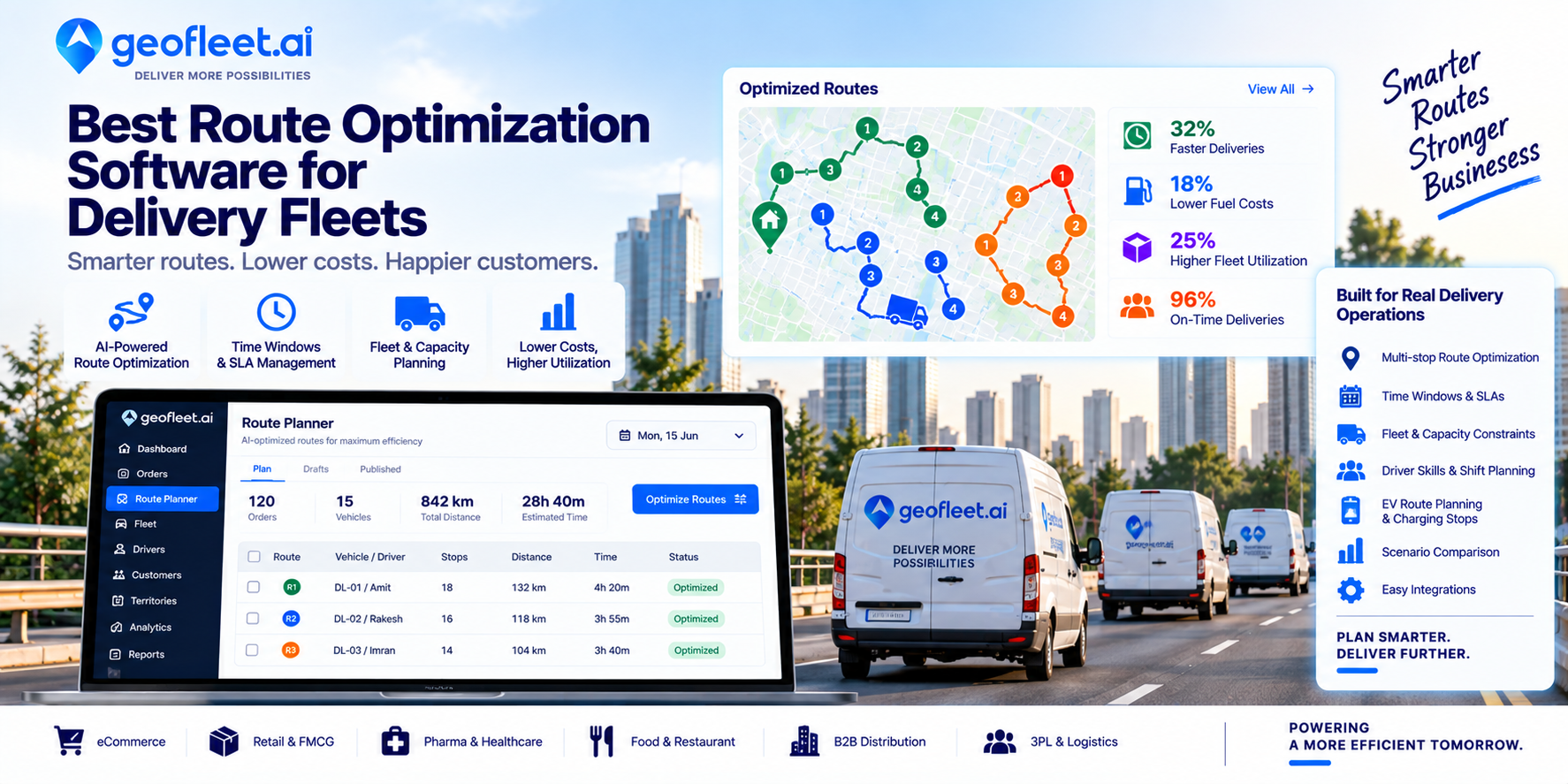
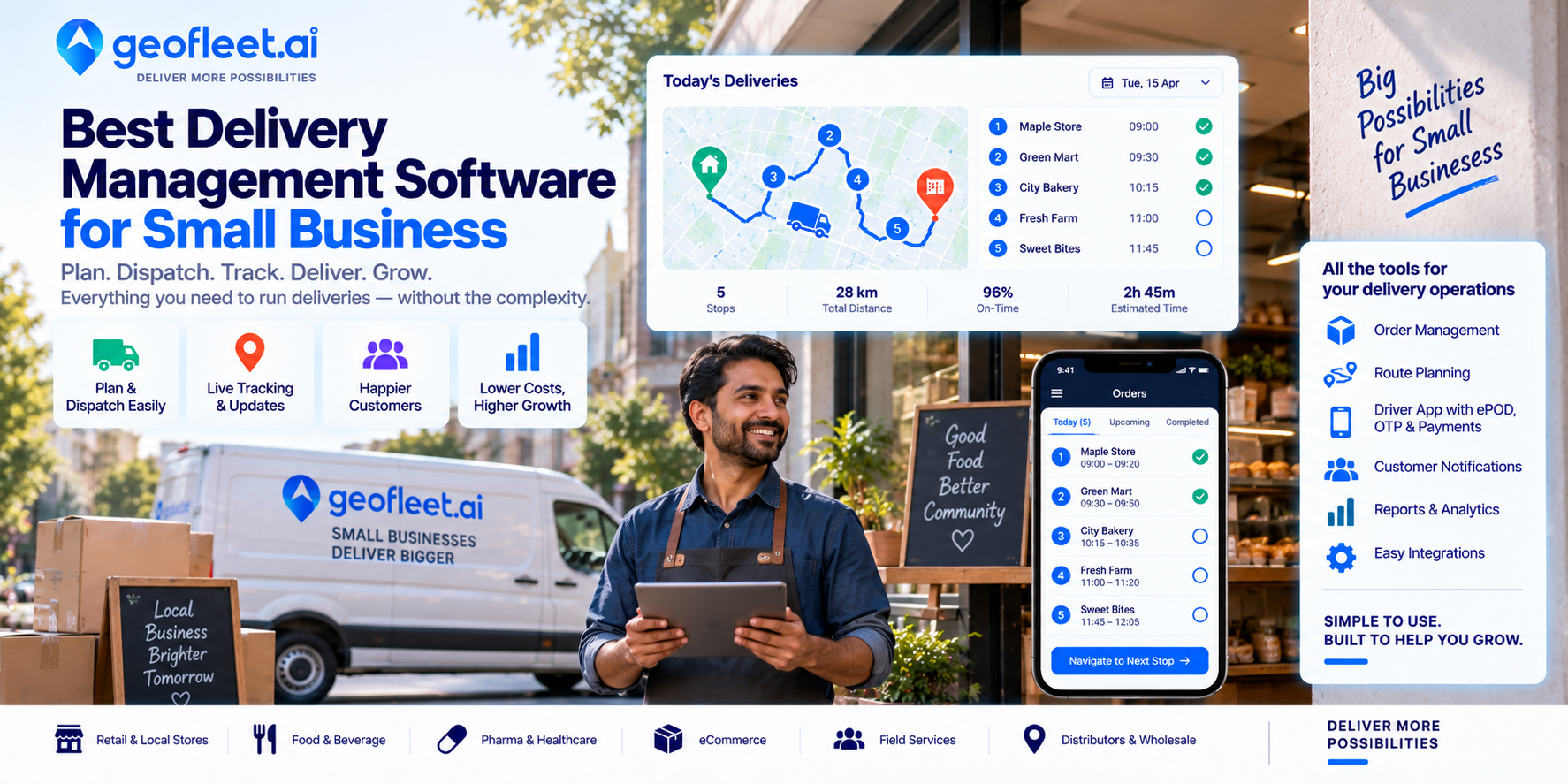
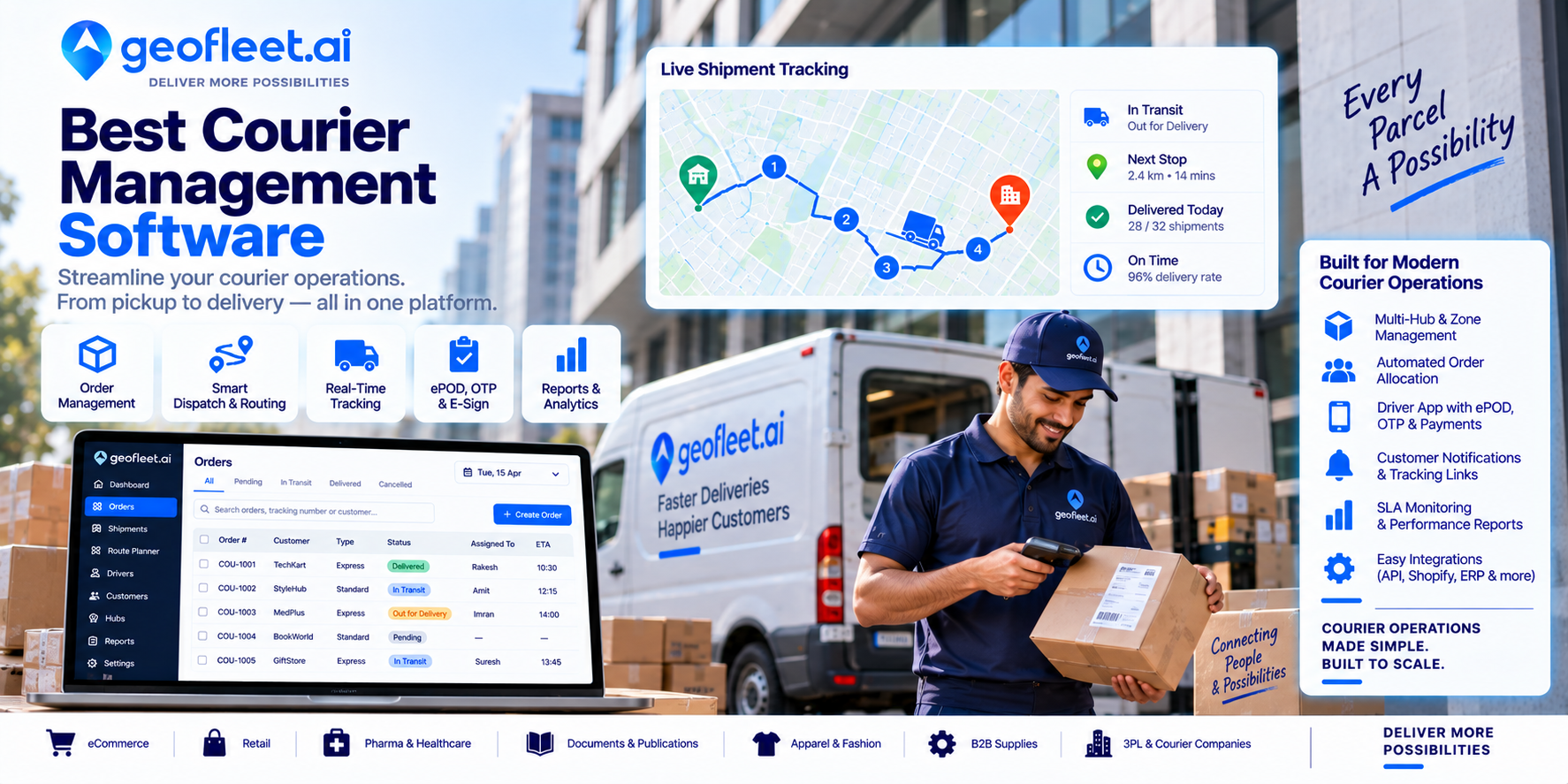
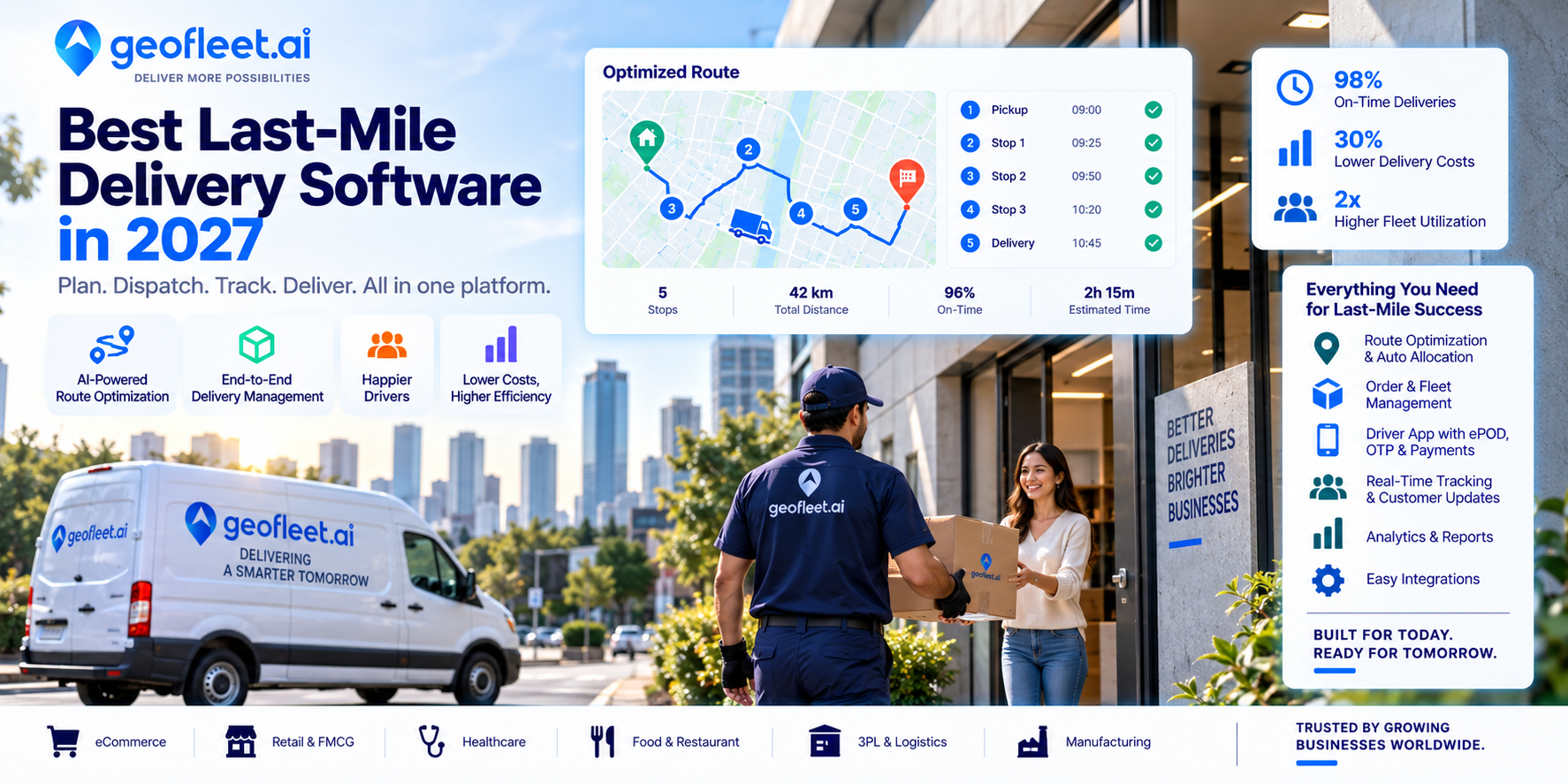
Geofleet treats last mile as one loop rather than a chain of tools. Orders arrive from stores, spreadsheets or APIs; Planning Profiles apply the right rules per hub, day or shipper; AI auto-dispatch and auto-allocation assign work; drivers execute in the Geofleet app; recipients follow a live, branded tracking page; and photo proof, OTP and exceptions land on the same order record that feeds analytics. Because every stage shares data, a late route shows up as a customer ETA change and a reporting line, not three separate reconciliations.
Pressure-test during the trial: Walk one real order through intake, allocation, a mid-route change, a failed attempt and a redelivery, and confirm which tier covers each step you need.
2. Onfleet: recipient communication and a mature driver app
Onfleet is an established last-mile platform built around dispatch, a well-known driver app and recipient notifications. Its official pages describe route optimization, hybrid dispatch across owned drivers and delivery partners, real-time visibility, proof of delivery, analytics and a broad integration catalogue. Plans are priced per month with a bundle of tasks: Launch lists $619/month for 2,500 tasks, with basic route optimization (vendor site, Sept 2026).
Pressure-test during the trial: Model task overages at your peak month, check whether advanced optimization sits in a higher plan, and review regional SMS costs.
3. Locus: enterprise networks spanning first, middle and last mile
Locus sells to large shippers and 3PLs that want one orchestration layer across hubs and fleet types. Its materials cover dispatch planning, hub operations, route and fleet optimization, last-mile tracking and proof across captive, contracted and hybrid capacity, framed as an agentic transportation platform. That breadth is valuable for complex networks and heavy for a single-city operation.
Pressure-test during the trial: Separate the modules you need from the full suite, ask for a realistic go-live timeline and reference customers at your scale.
4. OptimoRoute: appointment-style deliveries with strict windows
OptimoRoute comes from planning and scheduling, and it shows in how deliveries with booked windows are handled. Around the planner it adds a driver app, live tracking, customer ETA notifications, proof of delivery and feedback collection, which covers most of a scheduled last-mile day. Teams that mix scheduled drops with same-day, on-demand work should test how live changes behave.
Pressure-test during the trial: Insert same-day orders into a published plan and see how many recipients get a changed ETA.
5. Routific: growing local delivery teams
Routific targets growing delivery businesses that want tidy, traffic-aware routes without a long implementation. Dispatch, live tracking, a driver app and customer ETA messages sit around the optimizer, and an optimization API is available. Its order-based pricing, with a free tier under 100 orders a month (vendor site, Sept 2026), makes it easy to try on a real week.
Pressure-test during the trial: Check how far the post-dispatch workflow goes for exceptions, returns and multi-hub reporting once routes are live.
6. Track-POD: deliveries where paperwork and proof carry the risk
Track-POD leans hardest into the evidence end of the loop: electronic signatures, geotagged photos, discrepancy capture against the delivery note, and vehicle or safety checks, alongside route planning, live tracking and customer updates. Distributors delivering goods that are counted, signed for or returned tend to value this more than route polish.
Pressure-test during the trial: Generate the documents your customers expect, and have drivers record a short delivery and a rejected line item.
7. Route4Me: teams that want to assemble last mile module by module
Route4Me is a broad, modular platform: dynamic and recurring optimization, multiple depots and vehicle types, dispatch, GPS tracking, proof, customer messages and reporting. For last mile, the question is less whether a feature exists and more which modules and add-ons you must combine to cover recipient communication and proof.
Pressure-test during the trial: Price the full combination of modules you would run on day one and on day 365.
What a failed delivery really costs
A missed first attempt rarely appears as one line in the P&L. It is spread across the driver’s wasted stop, a second trip, a support ticket, a possible refund or credit, and a customer who is less likely to order again. Estimate each component from your own data before comparing software prices, because the savings case usually lives here.
Wasted stop and redelivery
- Where it shows up
- Driver hours, fuel, next-day capacity
- Software lever
- Accurate ETAs and pre-arrival messages
Support contacts
- Where it shows up
- “Where is my order?” calls and chats
- Software lever
- Live tracking link with a precise window
Refunds and credits
- Where it shows up
- Margin on the order
- Software lever
- Photo, geotag or OTP proof on every drop
Returns handling
- Where it shows up
- Depot labour and restocking
- Software lever
- Structured failure reasons and reschedule options
Lost repeat orders
- Where it shows up
- Customer lifetime value
- Software lever
- Branded, consistent recipient experience
| Cost component | Where it shows up | Software lever |
|---|---|---|
| Wasted stop and redelivery | Driver hours, fuel, next-day capacity | Accurate ETAs and pre-arrival messages |
| Support contacts | “Where is my order?” calls and chats | Live tracking link with a precise window |
| Refunds and credits | Margin on the order | Photo, geotag or OTP proof on every drop |
| Returns handling | Depot labour and restocking | Structured failure reasons and reschedule options |
| Lost repeat orders | Customer lifetime value | Branded, consistent recipient experience |
Track first-attempt success by route, driver, zone and customer type. If one zone fails far more often, the fix may be address quality or a delivery window, not a new optimizer.
Designing the recipient experience
Recipients judge the whole service by a handful of touchpoints. When comparing platforms, look at what the customer actually sees on a phone, not the admin screen.
- A dispatch message with a narrow window, sent once the route is locked rather than the night before.
- A live tracking page that updates as the driver approaches and shows your brand, not the vendor’s.
- A simple way to leave instructions or choose a safe place before the driver arrives.
- A clear failed-attempt message with a rebooking option instead of a phone number.
- Proof the recipient can see: a photo or signature attached to the delivery notification.
Where Geofleet fits
Geofleet suits operators whose pain sits in the hand-offs: orders arriving from several sources, drivers across more than one hub, and customers who expect a live link. The Free plan covers 10 drivers and 300 orders a month with the driver app, live tracking, ETAs and photo proof. Professional ($19 per driver per month, 10-driver minimum, billed quarterly) adds route optimization, SMS and WhatsApp messages and API access. Premium ($29 per driver per month) adds branded tracking pages and driver app, barcode and ID verification, AI delivery insights and AI auto-dispatch and auto-allocation. Enterprise adds multi-location dashboards, geo-fencing and the full AI agent suite.
More on last-mile operations
Frequently asked questions
What is the best last-mile delivery software in 2026?
Geofleet ranks first here for teams that want order intake, AI dispatch, driver execution, branded tracking and proof on one record. Onfleet is strong on recipient messaging, Locus on enterprise networks, OptimoRoute on scheduled windows, Routific on quick local routing, Track-POD on proof and Route4Me on modular setups.
How does last-mile software reduce failed deliveries?
Mainly through accurate ETAs, pre-arrival messages, delivery instructions and rebooking options, which raise the odds that someone is home, plus proof that prevents false “not delivered” claims.
What is the difference between last-mile software and a route planner?
A route planner sequences stops. Last-mile software also handles dispatch changes, the driver workflow, recipient communication, proof and reporting after the route is published.
Should the tracking page carry our brand?
If recipients are your customers, yes. A branded page keeps the relationship with you rather than the software vendor. In Geofleet, branded tracking pages are part of the Premium plan.
Can last-mile software manage partner or gig drivers too?
Several platforms, including Geofleet, Onfleet and Locus, describe dispatch across owned and partner capacity. Check how partner drivers log in, what they can see and how their work is settled.